Click here for background readings for Spring 2026 students
What We Do (Broadly):
Our general approach is to understand a range of psychological processes through the lens of physical actions. By doing so, we study the socio-cognitive mechanisms for action planning and coordination within and across individuals, including to the link between perception and action, face processing, and experience of sensing agency over our actions. We do so using a combination of behavioral and computational methods.
 |
 |
Ongoing Project in the Lab:
(The PI works on a range of additional projects that you may be able to get involved in and that may result in experiments we run in the lab, but below are current ones)
Understanding the Experience of (Inter)Action
 |
 |
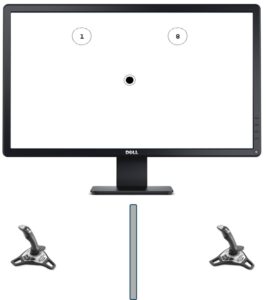 |
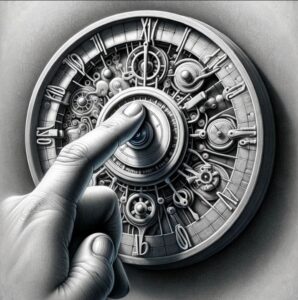
Philosophers have long been interested in the link between physical actions and our subjective experience of control (sense of agency) over such actions.Some of our recent experiments focus on how to measure the sense of agency, by focusing on the value of implicit and explicit measures. We also are developing a paradigm to better understand the link between the sense of agency and self-efficacy (i.e., an individual’s belief in their own capacity to execute behaviors needed to achieve specific goals).
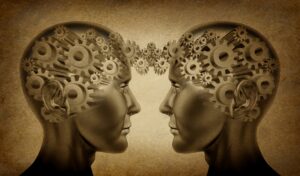
Aside from understanding how to measure the sense of agency for individual actions, few experiments have addressed how we derive a sense of agency during joint actions. To investigate this issue, the PI developed a core paradigm (van der Wel, 2015, Cognition) that allows for the systematic manipulation of actions and their effects in a dyadic joint action task while recording each action partner’s objective action contributions. By varying role distributions and levels of objective control, this task is ideally suited to gain a better understanding of the sense of agency and its measures in joint action contexts.
Using Social and Non-Social Facial Cues to Support Interaction
|
|
|
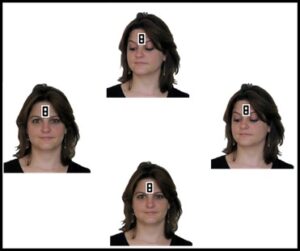
Representing others is a fundamental part of social cognition. Aside from action-related information, we also process many other behavioral displays of those around us to align our own actions. One such example is processing of others’ facial expressions. In this context, we perform experiments to understand how cues related to eye gaze influence attentional processing in a perceiver. As such, this work focuses on mechanisms that could support successful interaction amongst actors. We have shown that attention is broadly captured by gaze direction and shifts in gaze direction (e.g., Bockler, van der Wel, & Welsh, 2014, Psych Science), that these effects on attention depend on holistic face processing (Bockler et al, 2015, Acta Psychologica; van der Wel et al., 2018, APP), as well as on the emotion expression on the face (Pittig et al, 2022, JEP:HPP; Breil et al, 2024, Emotion). We are currently testing whether pareidolia faces (i.e., faces composed of objects) invoke similar attentional effects, and how emotion perception interacts with our action system.
Independent Study:
Many students (see below) have joined the lab for independent study during their time at Rutgers. If you are interested in doing so, step 1 would be to reach out to Dr. van der Wel (r.vanderwel@rutgers.edu) to discuss your goals and interests.
When people sign up for independent study, they typically do so as a three credit course. While in the lab, you will work together with several other students (oftentimes a graduate student and several other undergraduate students) most closely on one particular project. What this work entails depends somewhat on which stage the project is in and on your skill set. Most of the time, it involves getting trained and certified to test participants and collect data, as well as taking part in data analysis and dissemination (for example, through a poster presentation at CURCA, the yearly on-campus undergraduate research symposium). During weekly lab meetings, you will also be exposed to other work going on in the lab. During these meetings, we discuss the design of new studies, ongoing issues and challenges with each of the projects, and we read papers to better understand how our work contributes to broader questions in the field.
People:
|
Lab Director: |
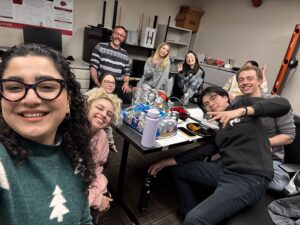
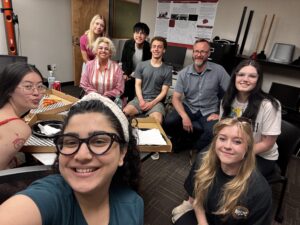
Lab Members 2025 – 2026: |
|
 |
 |
 |
Current graduate students:
Fatemeh Mahdinia
Lexus Myers
Jason Nguyen
Current undergraduate students:
Presley Albadine
Caitlin Cohen
Joseph Connors
Richard Davenport
Forrest Miller
Abby Walker
Brianna Watson
Lab Alumni:
 |
 |
 |
Graduate students:
Connor Kuntz (2024-2025)
Dillon Miller (2013-2015)
Allison Night (2025)
Ashlyn O’Halloran (2021-2023)
Theodore Oing (2011-2013)
Jason Snyder (2021-2023)
Alex Titus (2013-2015)
Melissa Waer (2019-2020)
Undergraduate students:
| Samantha Caruso (2023–2025) Kylie Fridell (2023–2025) Amir Lindor (2023–2025) Moumita Banerjee (2022–2024) Nagelli Torresfrancisco (2023–2024) Yana Prodanova (2024) Robert Snyder (2024) Melissa Suarez (2024) Regina Young (2024) Ryan Johnson (2023–2024) Auralee Smith (2022–2023) Amanda Terzini (2019–2021) Ben Carroll (2020) Caitlin Hoffman (2019–2020) Colleen Sheppard (2019–2020) David Neeff (2020) Lauren Bianco (2019–2020) Peter Huynh (2019–2020) David Velez (2019) Eric Mcglone (2019) Ederline Rosado (2019) Luis Padilla (2019) Maxine Moseley (2018–2019) Ryan Dick (2018–2019) Nitan Shanas (2018) |
Samantha Burns (2016–2017) Donovan Miles (2016–2017) Alishah Cobblah (2013–2015) Tia Baranowsky (2015) Jairo Contreras (2015) John De La Cour (2015) Amanda O’Hara (2015) Jonathan Wood (2015) Robert Konopka (2014) Ryan Bednarik (2013–2014) Rebecca Davis (2013–2014) Stephanie Schuster (2013–2014) Lisa Zappley (2013–2014) Blake Clemmer (2012–2013) Catherine Fetterman (2013) John Huhn (2012–2013) Kimberly Schimpf (2012–2013) Nisan Novack (2013) Shahnaz Abdul-Haqq (2012) Jeremy Bell (2012) Shane Dasta (2012–2013) Jade Iannacone (2012) Jeffrey Monk (2012) Heather Rosiak (2012) |